Blog: Week 1 | Material Expression
- up915094
- Feb 11, 2022
- 5 min read
Updated: Aug 4, 2022
EXPLORE | Follow the Material
Key words: Preservation, disruption, transformation, palimpsest.
"Every inch of ground on this planet is a palimpsest, scraped clean and overwritten a million times, leaving behind just as many ghosts." - Seanan McGuire
Palimpsest: palímpsēstos = "again" + "scrape"
Architectural palimpsest is defined as something reused or altered, with visible traces of its form still remaining. Often diverse layers are present with apparent aspects beneath the surface. This is something that offers us the opportunity of intricate exploration and discovery as designers.

Activity 1- Initial Samples
For our first activity, we examined a chosen material from Knight and Lee. I began by taking small samples of drawings and rubbings of materials at the site.

One of the materials that stood out to me was the green tiling, which covers the front façade of the building. Using green pencil, I tried to recreate the smooth finish which appeared slightly lighter as it reflected the surrounding daylight.
The concrete is present throughout the interior of the structure within the flooring and structural support. The charcoal rubbing of the concrete reflects the slight roughness of the material, where various small bumps have imprinted darkly on the paper.
The rubbing of the brick, which is found throughout the majority of the exterior façade, had the most interesting texture. The roughness of the material is very apparent via the clear definition between the red pastel and the paper. For this reason, I decided to recreate the rubbing in a larger scale.
Original Enlarged Rubbing

This is the original rubbing before any interventions were made. I used charcoal and blank newspaper paper, as the softness of the charcoal and the thinness of this kind of paper allowed for maximum expression of the texture. The texture of the brick easily wore down the charcoal I was using, as I was rubbing two materials with parallel strengths against each other.
I noticed small bumps and gaps, likely where the material had been exposed to weathering. This will have resulted in the rougher, uneven texture as penetrations in the surface were made by gradual erosion from wind and rain.
In hindsight, I would not have folded the paper as this created horizontal lines which were difficult to get rid of without ruining the markings from the charcoal, and so this was still prominent within the enlarged scan.
First Material

For one of my transformations, I wanted to add natural materials, as this is an important aspect of my IMP design. I observed the contrast between the two materials:
Brick | Foliage |
Rough | Smooth |
Strong | Delicate |
Completely matte | Subtle shine |
Rigid | Flexible |
Dull | Vibrant |
On the other hand, I also noticed some similarities. Although bricks themselves are man made, it is also derived from natural materials. Brick is made from some of the most abundant, natural materials on Earth, clay and shale, then fired through a kiln to temperatures of up to 2,000 degrees. This is what gives it it's durability. Clay brick differs from concrete units that rely on a cement paste to bond materials together, making clay bricks significantly stronger.
I found it interesting to see the interaction between a material which was initially natural, and has been moulded into a new disposition, alongside nature in its purest form. This allowed for a transformation of the original material, as a new relationship between partly man-made and organic was established.
Second Material


For my second material investigation, I decided to overlay the rubbing with paint and use old, patterned fabric to create different textures. I stripped back the paper in order to mimic the effect of cracking and revealing old layers underneath - creating my own form of palimpsest. The smaller tears were created from pressing the fabric into the wet paint, which began the rip the paper slightly. I then followed the material by increasing the size of these rips and tearing back more layers. The rest of the paint marks dotted throughout the image were created from paint picked up by the fabric and pressed into the paper. The cut-out fabric made an intricate pattern within the rubbing.
The second investigation was intriguing to me as I was unsure of the effect that I was going to achieve from mixing paint and fabrics. I was pleased with the end result, as I succeeding in 'peeling back' the original image, to reveal a contrasting layer underneath. This was my representation of palimpsest, as it represents how even though the material will be reused, it still has vibrant history underneath the surface. The shimmery paint dotted on the top layer and along the cracks represents how there will always be elements of what the building used to be within the adapted space.
Further Reflections
This exercise helped me to think about how to follow the material, as I noticed that accidents or unexpected effects can indicate new ways an existing material can be activated and rejuvenated. It was intriguing to allow the material to take the lead and stay open minded to the end result. I was also able to establish a greater understanding of the site materiality.
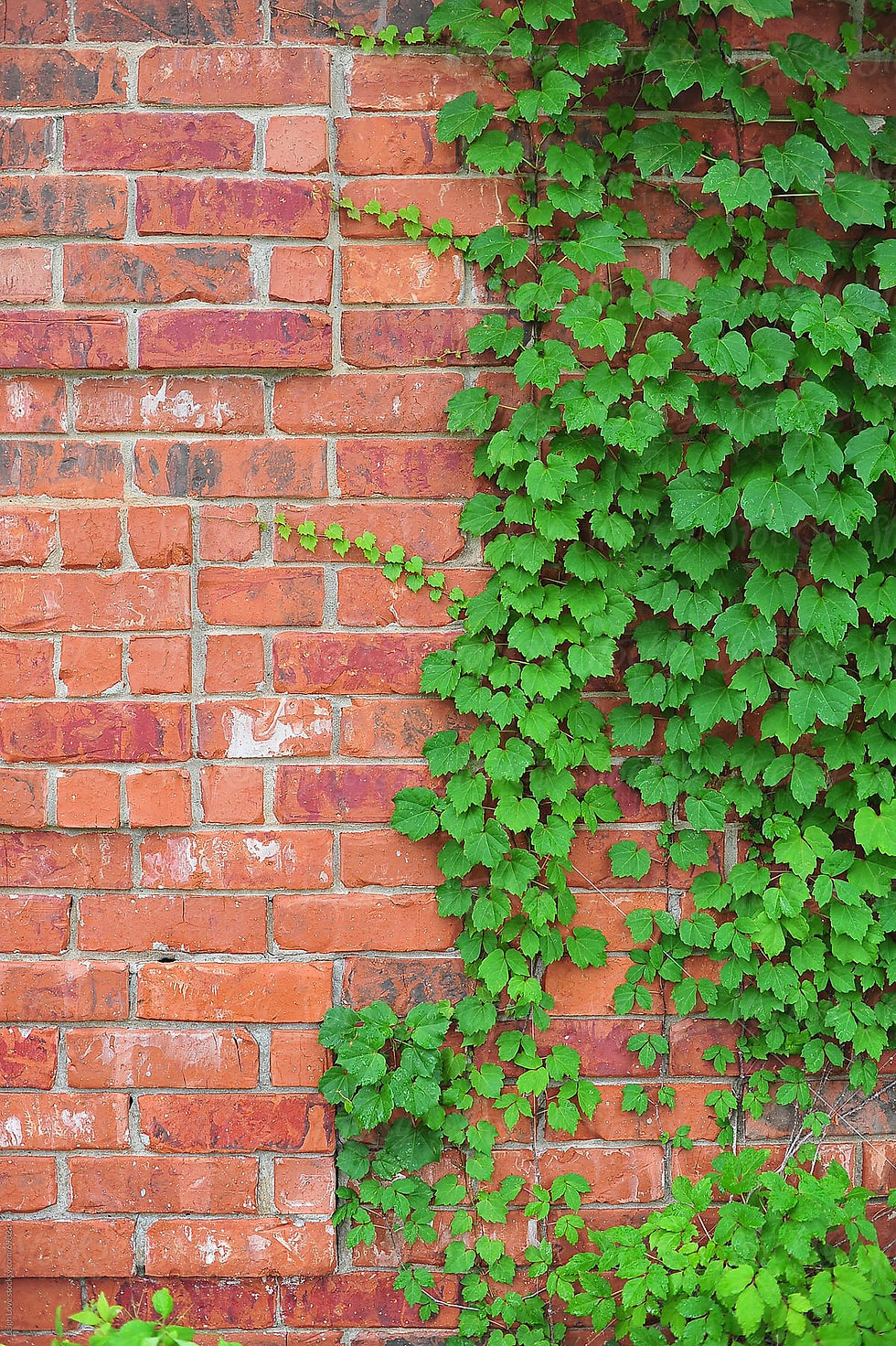
I also began to think about how brick and foliage can interact naturally. For example, when ivy is in its climbing state, it has three- to five-lobed glossy leaves, which attach supports by producing aerial roots along the stems.
When the stems are pulled away from the wall, they often leave behind the root ends, that persist and can often only be removed with wire brushes or pressure washing.
This is a good example of palimpsest, as the ivy leaves physical traces of its presence behind.

The Materiality of Knight and Lee
Below I have included some photos which were taken of the interior and exterior of the Knight and Lee building. They display a close reading of the materiality of the site and the ways in which some of these interact with each other.

Windows

Stairways

Façade

Structure
It was interesting to assess the site materiality and the ways in which I could potentially adapt and reuse these materials within my design. I think it is important to understand the site on a detailed level in order to have a holistic view of the building.
Palimpsest

The examples above are depictions of the sites history, some of which I would like to preserve in my IMP in order to retain the observed palimpsest. This is a huge part of the buildings character, which I believe to be a very special thing that we, as interior designers, have a responsibility to take into consideration. This allows us to establish a sense of respect for what was, whilst we visualise what could be.
References
Gatica, J. (2017). Architectural Palimpsest - Rethinking The Architecture School https://worldarchitecture.org/architecture-projects/hhvzp/architectural_palimpsest__rethinking_the_architecture_school-project-pages.html#:~:text=Palimpsest%3A%201%2D%20%22A%20manuscript,to%20look%20at%20the%20structure%2D
IMP Group Work. (2021). https://drive.google.com/drive/u/1/folders/0AP-6F5VDyUT5Uk9PVA
Silva, E.A (2018). Design Studies in Critical Conservation https://research.gsd.harvard.edu/mci/portfolio/thesis-critical-intervention/


Comments