Blog: Week 6 | Material Expression
- up915094
- Mar 18, 2022
- 7 min read
Updated: Aug 4, 2022
ANALYSE | Materials Research
Key words: Fabric, sustainability, recycle.
"Textile arts are versatile and can transition from use to use, and that is their true genius." - Sandra Espinet
Fabric
In week 6, our task was to work in groups to research a material of our choice using precedents in order to build up a database of information. First, I chose to investigate fabric and the way in which this was used at the King Fahad National Library in Saudi Arabia.
Case Study 1: King Fahad National Library (2013)

Location: Riyadh, Saudi Arabia
Client: Kingdom of Saudi Arabia
Architect: Gerber Architekten
Interior designer: Gerber Architekten
Design: 2004 – 2006
Construction: 2008 – 2013
Completion: November, 2013
Area: 86,632 sqm
Building costs: 330.588.000 sr
Costs by qm: 3,800 sr/sqm
Type of fabric: Teflon-coated fiberglass membrane cloth


The King Fahad National Library, one of the most important cultural buildings in Saudi Arabia, was completed and went into use for its intended purpose in November 2013. Originally constructed in the 1980s, the old library building consists of a cruciform frame built from reinforced concrete. To expand the library, Gerber Architekten created a cuboid structure to surround and preserve the existing building. Redefined as the centre piece of the campus, the old building now serves as the internal stacks. The dome and roof of the old building have also been replaced by a series of steel and glass skylights that flood the reading rooms with light.
The façade of the library is made up of continuous strips of white nylon, positioned over a steel and wire framework in a nature that plays with depth and curvature. The inserted white membranes act as sunshades and interpret the Arabian tent structure tradition in a modern, technological way. The façade has a solar penetration level of only 7%, and at the same time makes it possible to look both in and out.
An environmental issue for the façade design was the enormous temperature differences in Saudi Arabia. Throughout summer, the steel ropes can heat up to a temperature of 80°C and will expand, due to exterior temperatures of up to 50°C and the ability of the material to absorb a great amount of heat. During winter, the steel can subsequently shrink as night time temperatures can reach below freezing. This large variation in climate had to be taken into account in order to optimise the tension of the steel wires. The membrane façade, which was optimised in relation to the local sun path by means of complex, three-dimensional light refraction, combines the required protection from the sun with maximum light penetration and transparency.
Collection of Technical Drawings and Details


Here, I have included some technical drawings that I found of the façade, which illustrate how the fabric membranes are secured to the steel frame using metal wire threaded through small punctures within the material. These were created using 3D printing. The wires are then pulled away from the material and secured, in order to create enough tension for the desired forms.
The Cultural Importance of the King Fahad National Library
The King Fahad National Library houses ancient Islamic writings which are very sacred to the religion. This space allows for international access to these writing, as the library works to offer its services scientifically, whilst preserving a variety of sources of Islamic heritage in systematic and technical grounds. The previously scattered literatures now have a home within this beautiful structure, allowing people to gain a greater insight into this Islamic research and understanding.
Context of Nylon
Nylon, the world's first entirely synthetic polymer fibre, was introduced by the DuPont company in 1938. Known for its strength, durability, and flexibility, the company originally marketed nylon to women, advertising the elasticity and longevity of nylon stockings when compared to rayon and silk.
During WW2, the US military began utilising nylon within parachutes, ropes and tents as they were concerned they were vulnerable to a cut off in silk production from the Japanese. Nylon was found to be more durable than silk and so it became a very popular material. It is now utilised in many ways, such as for conveyor belts, parachutes, carpeting and clothing.

How is Nylon Made?
Nylon is a polymer, composed of repetitive units of diamines and dicarboxylic acids that contain different numbers of carbon atoms. Most contemporary nylon is made from petrochemical monomers (the chemical building blocks making up polymers), combined to form a long chain through a condensation polymerisation reaction. The resulting mixture can be cooled and the filaments stretched into an elastic thread.

Sustainability
Nylon production is associated with similar negative environmental impacts as fossil fuels, due to the release of greenhouse gas. This is because, since the middle of the 20th century, synthetic fibres such as nylon come primarily from oil. This material also contributes to microfiber pollution. For this reason, I won't be using nylon within my IMP, as I want to keep my materials as environmentally conscious as possible.
The Future of Nylon
Use of nylon in recycled forms has been utilised by brands such as Eileen Fisher, Aquafil and Swedish Stockings. This can be sourced from plastic bottles, nylon fishing nets and left over scraps from clothing production. Researchers are also exploring ways in which this material can be recycled outside the realm of fashion, such as the incorporation of nylon fishing nets into fibre-reinforced mortar.
Polymers which don't come from oil and gas extraction are also being explored by scientists. These come in the form of new bio-based polymers from metabolic engineering of microorganisms that can produce different chemicals, materials and fuels from low cost, renewable resources.

Group Work
Case Study 2 by Koni: We Hotel Toya (2018)

Location: Hokkaido, Japan
Client: We Hotel Toya
Design team: Kengo Kuma & Associates
Completion: 2018
Size: 5,330 sqm
Project brief: A former care home on the banks of lake Toya, Japan was transformed by Kengo Kuma into a boutique hotel.
Type of fabric: 100% flame-retardant Trevira CS
Kengo Kuma as a designer and the office are constantly in search of new materials to replace concrete and steel and seeks a new approach for architecture in a post-industrial society.
This Project is based in a very rural part of the area, with amenities and shops being 25 minutes drive to… This design focuses on bringing natural elements indoors as found outdoors.
‘Comfortably warm room, like a cedar forest, for the hotel guests.’
The main materials of the exterior and interior are of cedar wood and fabric. The Fabric is found in the bar and restaurant.


Purpose: Cave-like room to emphasise the fantastic view of the lake and create cosiness…
Further Purpose: Acoustics
Type of Fabric:
100% flame-retardant Trevira CS yarn has a pronounced weave with delicate flaming and knobs that is reminiscent of silk or linen.
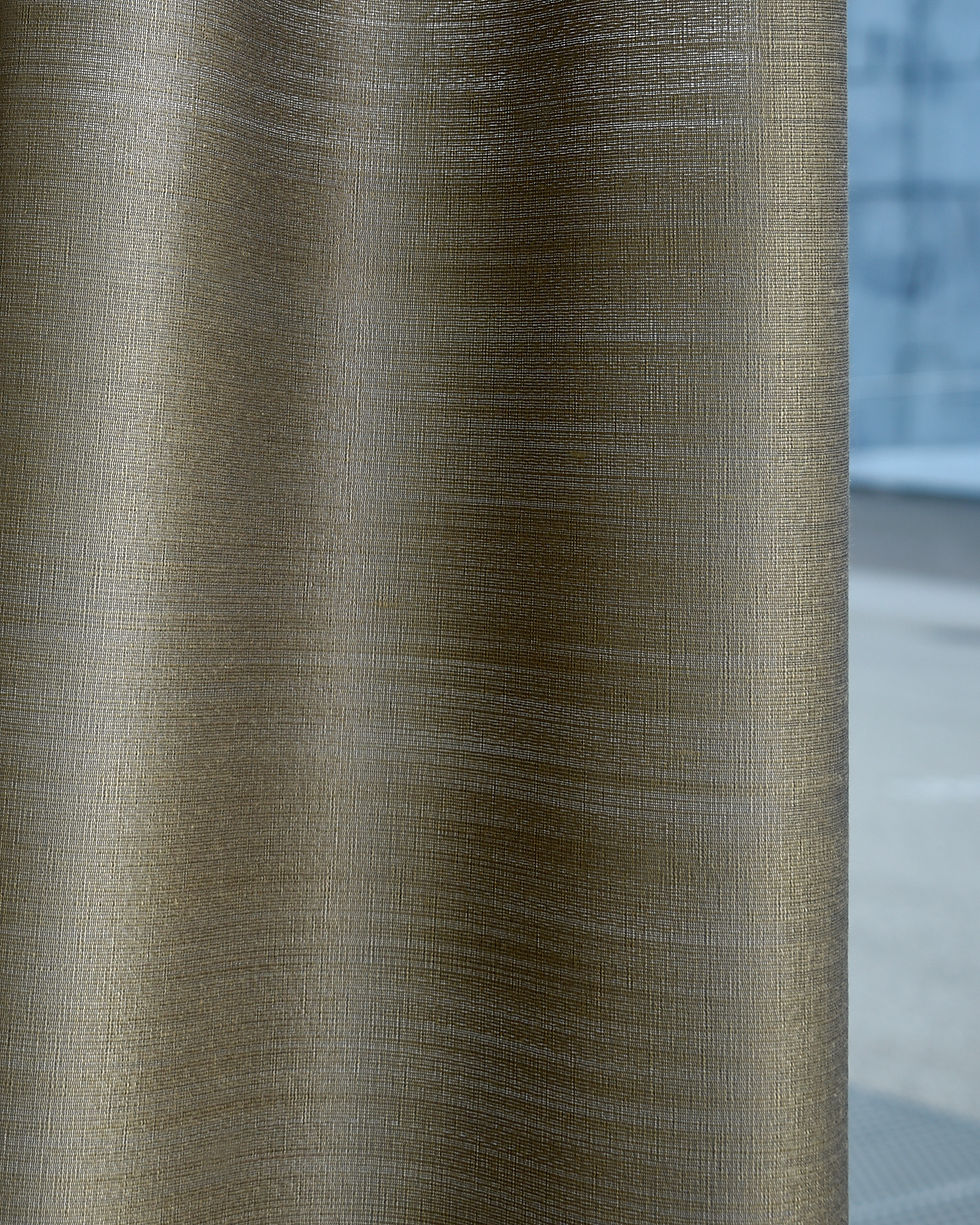
Fabric Profile
PONTE III ART.-NO: 0005510
Use: Dense curtain fabric
Material: 100% Flameretardant polyester (Trevira CS)
Fabric width: 160 cm
Weight: 242 g/m²
Sound absorption: Alpha value 0.80 ( Anything above 70% is considered good).
The Importance of Sound Absorption
The fabric is measured in Alpha Value, what does that mean? That it’s a Good sound absorber. Alpha Value ‘’ accurate measure of sound absorption Where the value of 0 means no absorption, and the value of 1 represents complete absorption.
The meaning behind acoustic fabric…
Acoustic fabrics are designed to improve sound conditions in architectural environments.
They ensure a healthy auditory environment and are a countermeasure for health problems, bad communication and slacking productivity.
Other elements include:
· Covering window areas, blackout;
· Dividing spaces;
· Decorative & design elements.
Sound Absorption VS Sound Insulation:
Sound Absorption: simply put the level of noise in the room to speech integrability and reduce noise background
‘’Sound-absorbing curtains and panels primarily deal with the shortening of reverberation times’’
Sound Insulation:‘’sound insulation deals with problems occurring between several spaces or buildings.’’
Other non-Architectural related
ACOUSTICALLY TRANSPARENT FABRICS
Scenic fabrics with a netted structure can be used to mask speakers or other audio installations without changing the sound characteristic
Construction?
Multiple creased fabric pieces joined together that follow the shape and stretch to the joined points between frame and fabric…


Case Study 3 by Koni: Cloud (2009)

Location: Stockholm
Client: Kvadrat’s showroom
Design team: The Bouroullec brothers
Cost: £881.56 per a set (24 pieces)
Completion: 2009
Project Brief: To create a showroom that could exhibit Kvadrat’s textiles in a way that the textiles were a part of the room.
Type of fabric: polyethylene foam fabric Kvadrat Divina (100% new wool)
‘’For many years there has been a trend of using fewer and fewer textiles. Curtains and carpets have vanished, and even our chairs have wicker seats and backs.’’ - Anders Byriel
The Cloud is a free hanging structure as a space partition or hung on the wall. It is made of the compression moulded, flame retardant polyethylene foam fabric Kvadrat Divina (100% new wool). The purpose of the project was to create a structure that can divide spaces and absorb sound. Each tile is the same irregular shape and when they are linked together, they bulge and make waves in an unpredictable way. The tiles are linked by rubber bands and the structure can be assembled and expanded by the user, which Bouroullec claims is easy to do…
Overall this is a playful way to add softness in the room but it is not easily available and accessible due to the price.

‘’It’s a device that can bring fabric into the house because we believe fabric is a really nice proposition to soften the space, to give it more warm feelings.” - Erwan Bouroullec
Case Study 4 by Linnéa: JS Bach chamber Music Hall
JS Bach Chamber music hall is designed for solo performances. The fabric moves and chances, stretches, compresses and moves around the space like a cocoon. A translucent fabric membrane is used, which has the ability to compress to the thickness of a handrail or stretch to the height of the space. The way the fabric construction is held up is by an internal steel structure and attachment to the ceiling. The design was designed to be reused and transported to new venues.

Location: Manchester Art Gallery
Client: Manchester International Festival 2009
Designer: Zaha Hadid
Size: 25m x 17m
Completion: 2009
Project Brief: A temporary structure to host a series of nine concerts of the solo compositions of JS Bach by international performers.
Type of fabric: Fabric ribbon Trapeze Plus, white FR Polyester/Spandex fabric, 214 g/m2


Polyester and Spandex
There is 52 million metric tonnes of clothes worldwide that are made by Polyester. The material is not biodegradable, as it is a type of plastic. The chemical that was produced in the 1940s, a faster and cheaper material than cotton. At best it will take 20 years to decompose, at worst 200 years to decompose. Spandex is also a type of plastic and has the same time to biodegrade as polyester.
Sustainability
To use recycled synthetic materials is an option and the modern day’s technology is coming up with many new solutions for synthetic materials. Natural ways to create fabric or other materials. More information can be found in Linnéa's portfolio about silk produced by silkworms and spiders and how that can be implemented in architecture and design as a fabric.
Reflections for IMP
Fabric is something I am interested in utilising within my IMP design, as I like the dramatic, sculptural effect which can be achieved. After researching different examples, I feel more confident in my knowledge of different ways that it can be used. There is also potential here for the use of recycled or sustainable fabric, which is the kind of environmentally friendly material that I am keen to make use of.
References
Jacobson, L. (2019). Interior Architecture and Design Portfolio https://linneajacobsson95.wixsite.com/myportfolio
JS Bach Chamber Music Hall. (2009). https://www.zaha-hadid.com/architecture/js-bach-chamber-music-hall/
Q., Ain Bashir. (2021). https://digitalcommons.unl.edu/cgi/viewcontent.cgi?article=12326&context=libphilprac
Vadicherla, T. et. al. (2015). Polyester Recycling - Technologies, Characterisation, and Applications. https://link.springer.com/chapter/10.1007/978-981-287-643-0_7
We Hotel Toya. (2018.) https://www.architonic.com/en/project/kengo-kuma-we-hotel-toya/20085637
(n.d.) https://www.archdaily.com/469088/king-fahad-national-library-gerber-architekten
(n.d.) https://www.creationbaumann.com/en/PONTE-III-10369.html


Comments