Blog: Week 3 | Material Expression
- up915094
- Feb 27, 2022
- 7 min read
Updated: Aug 4, 2022
EXPLORE | Material Transformations
Key words: Create, transform, reflect.
"The task of the architectural project is to reveal, through the transformation of form, the essence of the surrounding context." - Vittorio Gregotti
In week 3, we were tasked with creating a site volume and then transforming it in some way. I decided to continue with my exploration of natural materials, as I did with Task 1 in which I used foliage. In this case, I used clay. Within this blog post, I first looked at some of the work of Rachel Whiteread, who creates volumetric artwork. I then go on to describe and reflect upon my own transformation process, which lead me to do some wider research into the material.
Rachel Whiteread


"Seeing a great piece of art can take you from one place to another—it can enhance daily life, reflect our times and, in that sense, change the way you think and are." - Rachel Whiteread
The work of Rachel Whiteread focuses on negative space castings ranging from doors, hot water bottles, beds, a bee hive, a staircase, toilet rolls and more, in an array of materials and colours. The utilisation of everyday materials are transformed in a way that we wouldn't normally see to create these unique and intricate volumes.
Process Part 1
Creating The Mould

1. Walls
I began to create the walls of the site volume using cardboard, glue and pins to hold it all together until it dried.
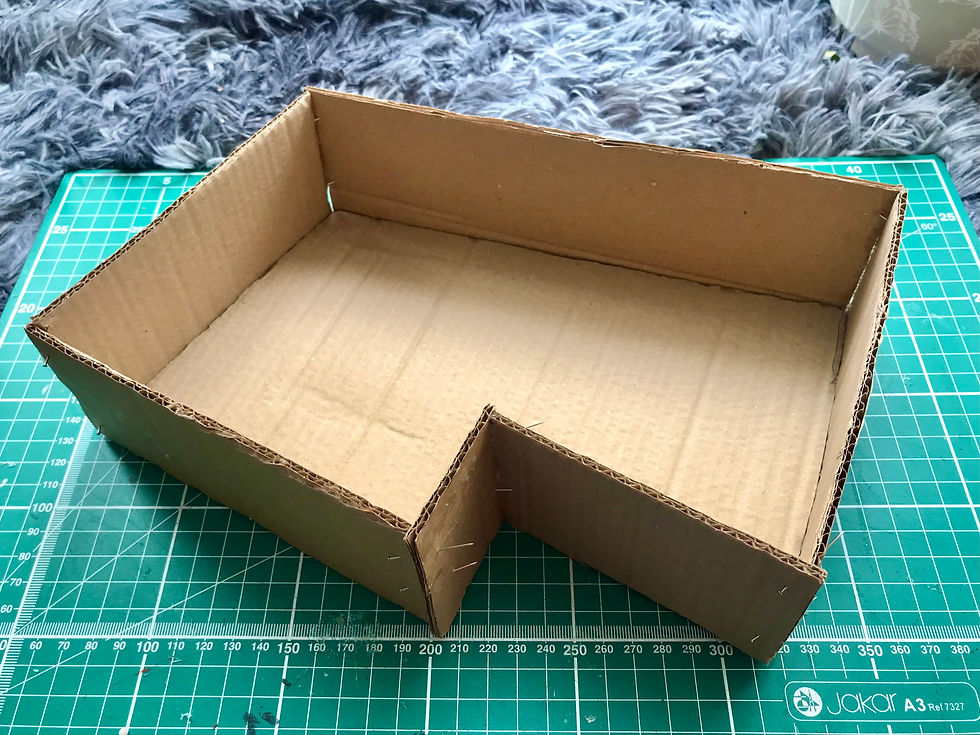
2. Base
After measuring out the correct sizing for the base, I cut it to size and glued it to the bottom. Again, inserting pins to help secure it until drying.

3. Tape
I added some waterproof electrical tape to ensure that the mould was completely sealed and solid. This was intended to prevent the clay from warping/damaging it.
Adding the Clay


4. Edges
I began by sculpting the clay into the bottom edges of the mould, ensuring it was pushed into the corners.

5. Layers
I continued to add more clay in layers, using the cutting wire pictured to easily slice off the chunks that I needed.

6. Smooth
Once I had filled the site volume with clay, I smoothed over the top using the tool in the bottom right of this photo. This helped to create an even, levelled out surface.
Textures in Process Part 1
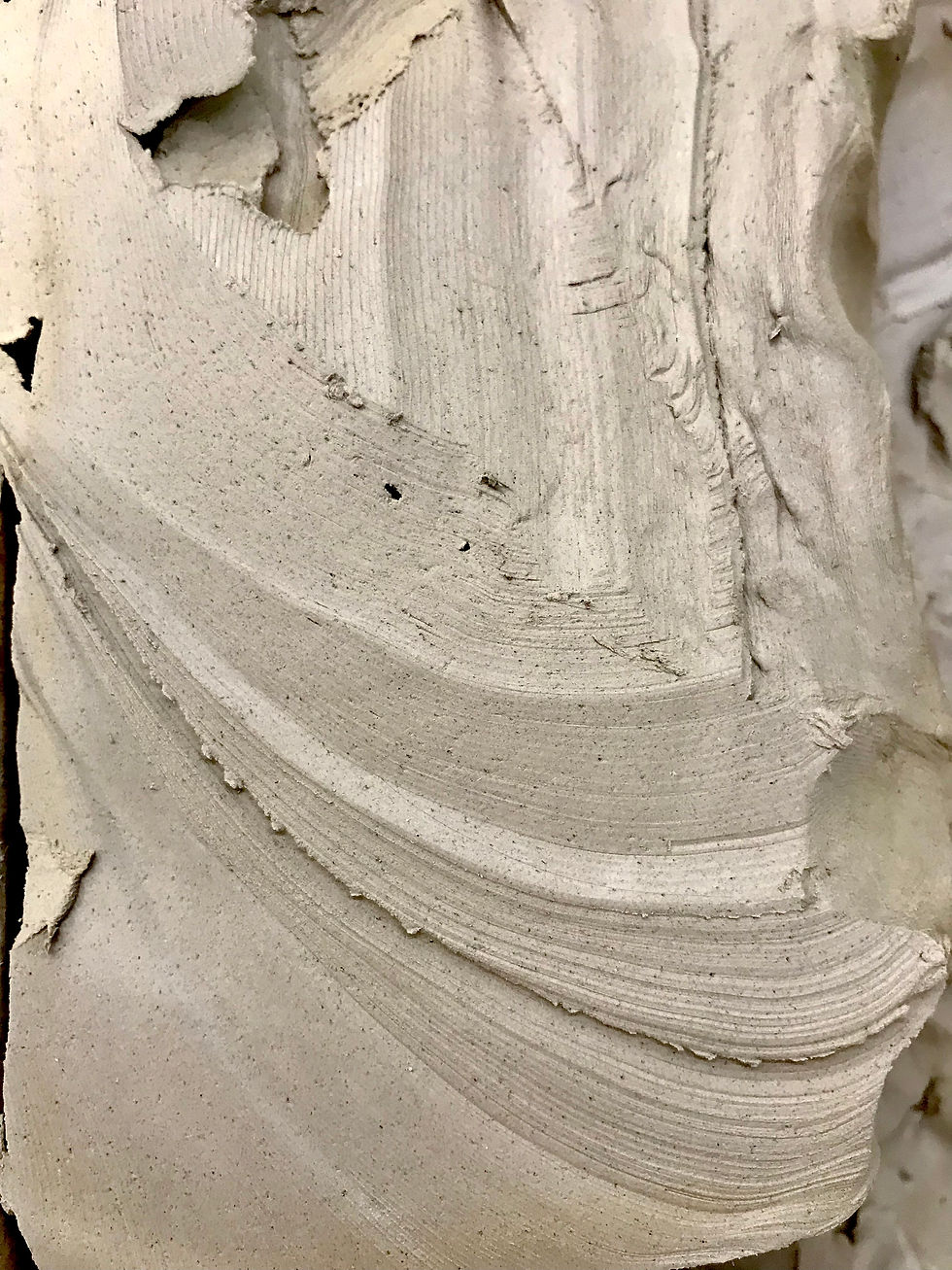
Pinholes
As I cut through the clay with the wire cutting tool, I photographed these swooping, fine lines within the material. Upon closer inspection, I noticed they were surrounded by tiny holes. These are caused by tiny pieces of organic matter, as clay is made up of minerals, plant life, and animals. These often remain within the clay once it has been glazed, due to gases escaping from the clay body during the firing cycle, and are known as pinholes.

Plasticity
This was another interesting texture that I wanted to include a visual record of. As I slid the clay towards the edges and pushed downwards in order to ensure it fit into the mould, I created these detailed markings. These highlight the plasticity of the material, as I was able to easily work the clay into the shape that I needed. Different types of clay posses a wide range of water content. Those with minimal water contents (known as the plasticity limit), is just moist enough to mould into shape, and those with maximum water contents (known as the liquid limit), can just about hold its shape.

Stickiness
As I tore the clay in half, I noted that there was a great deal of resistance and an interesting rock-like texture. This lead me to research into what clay is actually categorised as, a mineral, rock or soil? I found out that clay is a sedimentary rock made of tiny particles which come from the weathering of other rocks and minerals. The particles can be transported by rivers or ice and then deposited. I then looked into the stickiness of clay, which can be described as adhesion and adhesive friction. Factors which can affect this property include: cohesion and internal friction of the clay, as well as shear resistance between clay lumps.
Reflection on Textures
The exercise of analysing different textures within clay helped me to understand it from a more geological perspective. I noted that with each texture I photographed, there was an interesting scientific explanation which provided more context as to why clay as a material behaves in the way that it does and possesses these particular properties.
Transformation

1. Soak
To transform my volume, I decided to apply water to the clay in order to add some malleability back into the material. After removing the mould, I used a container to avoid any excess mess and added the water.

2. Observe
I observed how the material had responded to the addition of water. It became softer again and I noticed some cracks where I had originally layered up the clay.

3. Crack
I wanted to further adapt the forms that the material had taken on during the making process, so I prized open the gap until cracks began to appear. As I took closer photos of the first result, I noted the cave-like forms that were created.


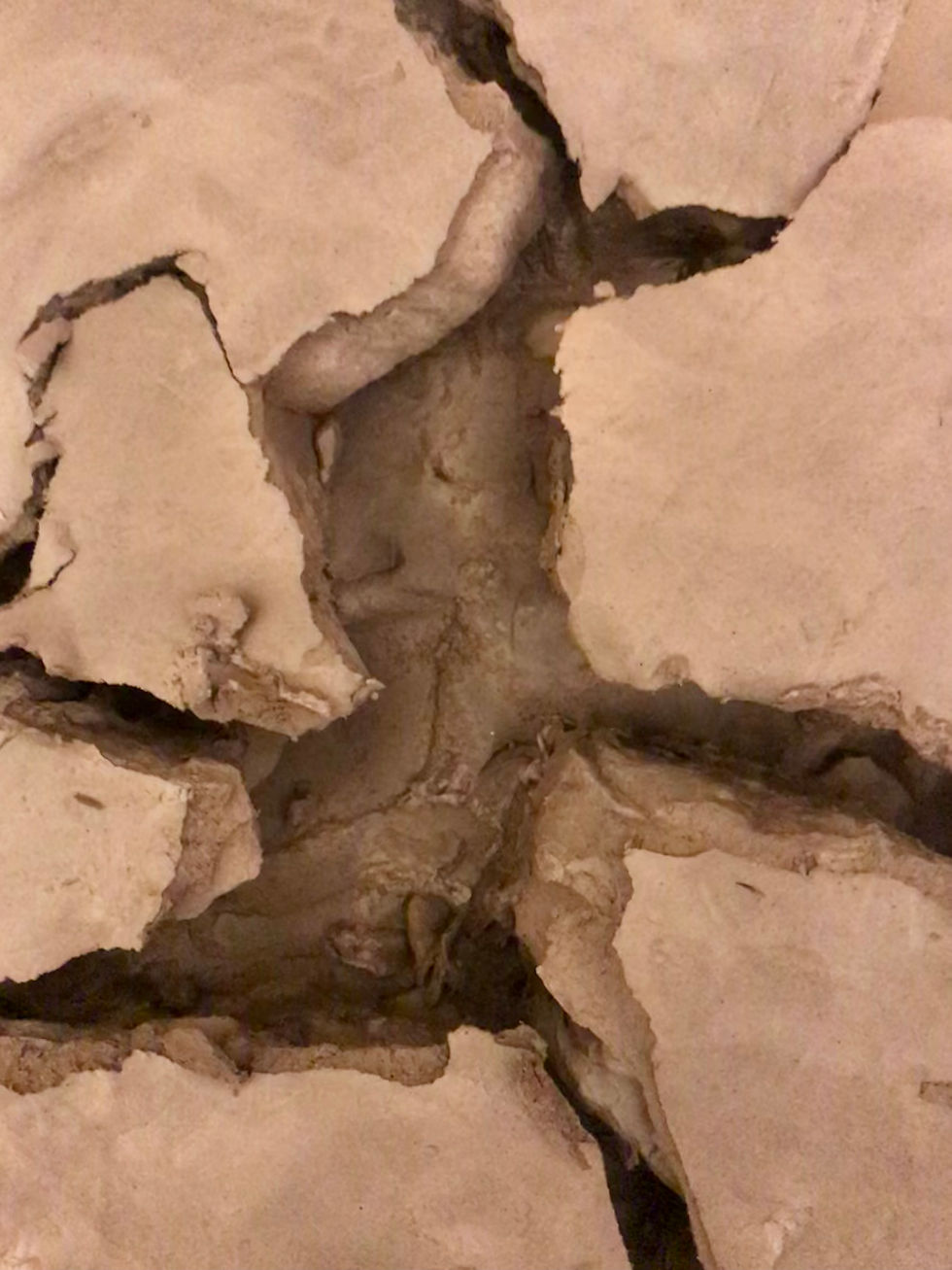

4. Develop
I further prized open the cracks within the volume until the majority of it was broken up.
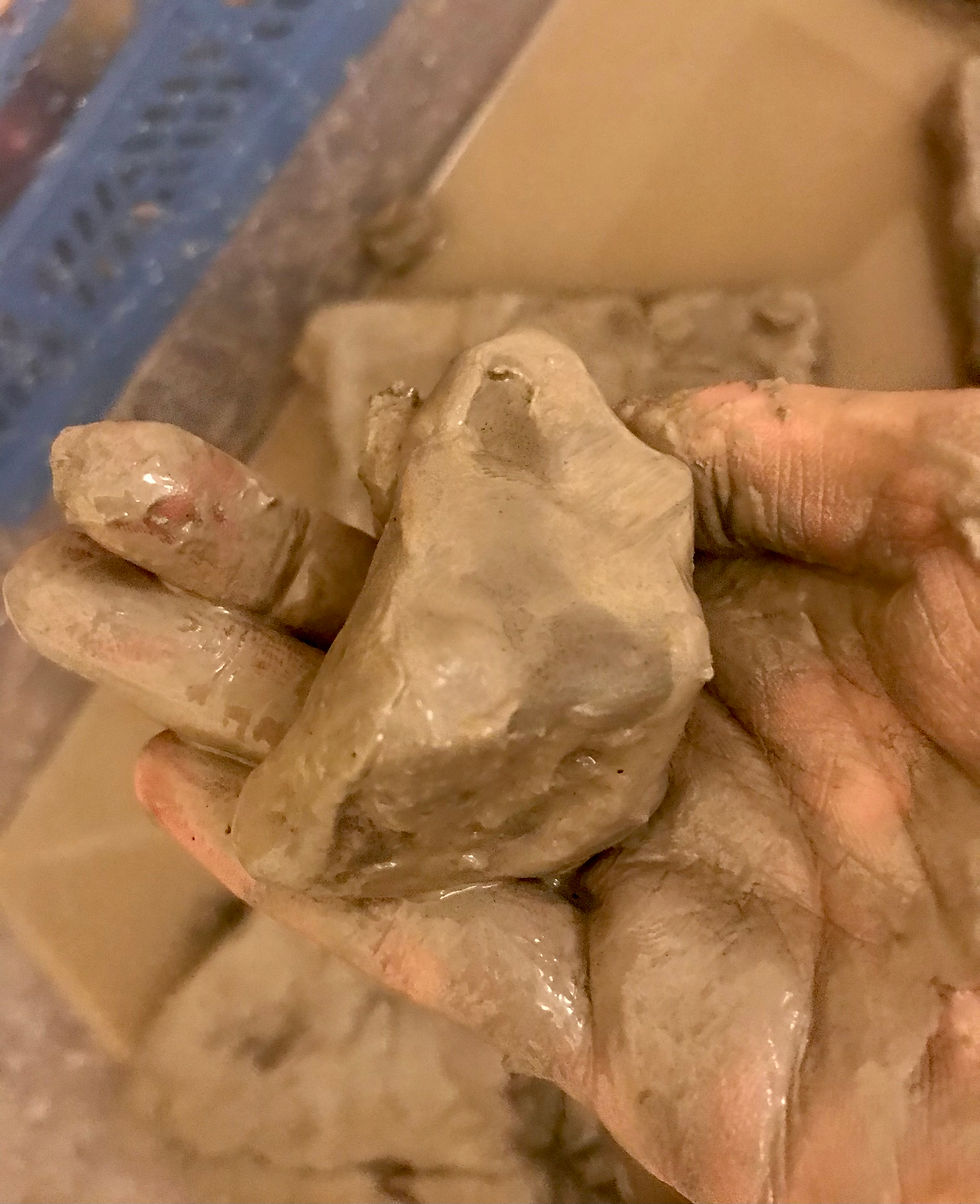
5. Mould
Once it was all broken up, I smoothed out one of the pieces and reshaped it. This is where I appreciated the adaptability of clay as a material, as it is able to take on new forms and be adaptively reused.

6. Rebuild
For my final step, I waited for the clay to dry again and rearranged it into a new form.
Reflections on Transformations
After reflecting on this exercise, I noted how much can be done with one simple volume. Assembling the pieces back together in a different way illustrates how with this material, new stories can be told even after it has taken on its solid shape. The adaptability of clay as a material is also something that I can appreciate. Its interactions with the body are perhaps one of the most intimate out of many materials that we use today, as it requires direct moulding using our hands to realise our creative visions. This is something very special about clay as a material, as the close interaction between human and non-human is an aspect of design that can sometimes be lost via the use of tools and machinery.
I also thought it was interesting the way in which clay on such a small scale can mimic real landscapes. The photo that I have included below, in particular, reminded me of when cracks can be seen in the earths surface. This is one of the aspects that draws me to working with natural materials, as not only are they sustainable, they also achieve a level of beauty that can't always be recreated via entirely man-made processes.


"The real beauty created by man never competes with the beauty of nature, it only completes it." - Mehmet Murat Ildan.
Clay as a Sacred Material

The sanctuary of St. James Episcopal Church in Pennsylvania is an example of historic and sacred architecture, filled with warm tones, decorative ceramic tiles, radiant stained glass windows and soft lighting. The illustrative ceramic tiles were created by Henry Chapman Mercer, who was a leader in the arts and crafts movement at the start of the 20th Century. The tiles were first installed in 1916, in order to tell the story of biblical scenes via playful colouring and religious iconography.

After looking into this case study, I began to wonder how ceramic objects contribute to the portrayal of religions around the world. Clay has been used as its own form of creative language to communicate religious devotion since the beginning of civilization, often serving as the only surviving evidence of early cultures’, traditions and religious practices.


These are some examples of clay tokens used in the ancient Near East.
Clay tokens were used in the ancient Near East for temples, burials, rituals, ceremonies and pilgrimage shrines. It is believed to absorb spiritual power throughout many cultures, which makes it a favoured material for blessings, protection and ritual offerings. The worshippers would place these tokens at shrines or give them to family members and sick people to touch/consume. There is also evidence to suggest that people in ancient Near Eastern times utilised these clay tokens to establish good fortune from deities for religious devotion, prosperity and health.
These connotations of the sacredness and the holy apply to many religions throughout history. Writers of the Judeo-Christian scriptures described clay and pottery as a metaphor for ideas about God. This is present throughout many scriptural references, for example:
“Then the word of the Lord came to me: ‘Can I not do with you… just as this potter has done?’ says the Lord. Just like the clay in the potter’s hand, so are you in my hand.” (Jeremiah 18: 6)
This independent research into the wider historical/religious contexts of the clay helped me to understand how particular materials can be used to express different religious devotions throughout time.
Clay in Practice
Walmer Yard

Walmer Yard in London was designed by Peter Salter and Fenella Collingridge, who utilised charcoal coloured clay plasters with straw to create this unique structure. This technique resembles ancient Japanese Arakabe methods, who often express their preference for organic materials, contrast, shadows and tranquillity.
These forms play with light and shadows throughout the day, as the curving shapes take on changing forms of beauty. Timber is also used within this structure, which is an abundant material within Japan, used alongside clay in traditional housing since around the 17th century.
"Were it not for shadows, there would be no beauty." - Jun’ichiro Tanizaki, In Praise of Shadows

References
Kooistra, A., et. al. (1998). Appraisal of Stickiness of Natural Clays from Laboratory Tests. https://www.researchgate.net/publication/255601643_APPRAISAL_OF_STICKINESS_OF_NATURAL_CLAYS_FROM_LABORATORY_TESTS#:~:text=Several%20factors%20are%20important%20in,roughness%20of%20the%20contact%20surface.
Martin, C. (n.d.). Ceramics Sacred Power. https://faithandform.com/feature/ceramics-sacred-power/
Palka, J.W. (2021). Not Just Counters: Clay Tokens and Ritual Materiality in the Ancient Near East. https://asu.pure.elsevier.com/en/publications/not-just-counters-clay-tokens-and-ritual-materiality-in-the-
Tanizaki, J. I. (2001). In praise of shadows. https://books.google.co.uk/books?hl=en&lr=&id=Se6n8fIw5T4C&oi=fnd&pg=PA1&dq=in+praise+of+shadows&ots=itspHTZdIW&sig=C53NPXke4m7nOotx9NV2558szgY&redir_esc=y#v=onepage&q=in%20praise%20of%20shadows&f=false
Walmer Yard Features Clay Plasters. (n.d). https://clay-works.com/walmer-yard-features-clay-plasters/


Comments